

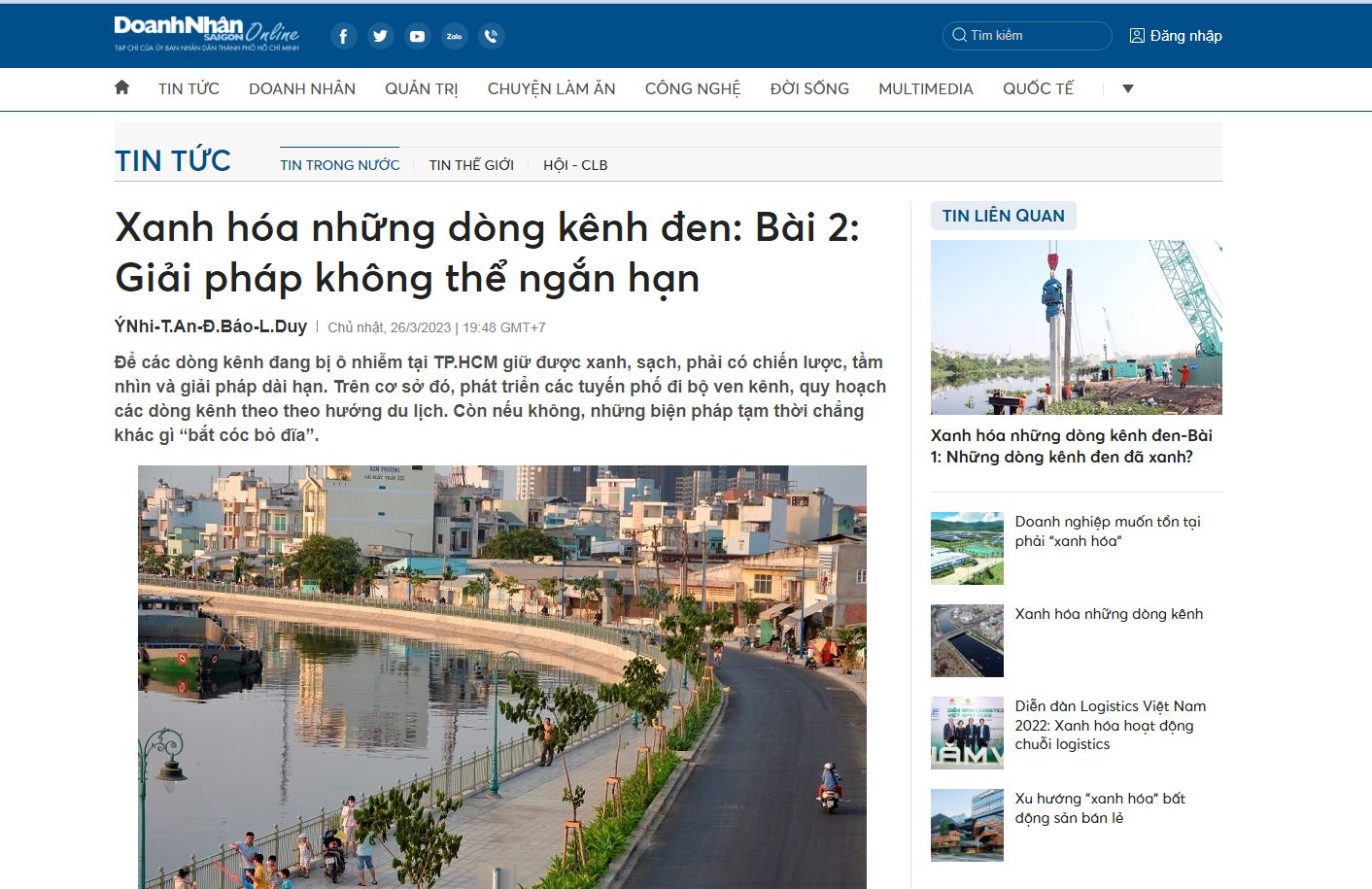
On March 26, 2023 - Ms. Dang Thuc Trang had an interview with Doanhnhansaigon about sustainable solutions for the black canals in Ho Chi Minh City. She emphasized the need for thorough research and elevation of urban heritage to avoid short-term solutions that may lead to pollution and resource waste. The city should be planned towards a water-based urban development. To keep the polluted canals in Ho Chi Minh City green and clean, a long-term strategy, vision, and solution are necessary. Based on that, developing pedestrian streets along the canals and planning the canals for tourism purposes is crucial. Otherwise, temporary measures are nothing but a "kidnapping and discarding" approach.

Urban planning towards water-based urbanism.
According to Ms. Dang Thuc Trang - Director of the Vietnam Cultural Heritage Conservation Fund in Ho Chi Minh City, the media has talked too much about greening the canals in Ho Chi Minh City, but it is only a short-term solution. After the green canal programs and projects end, many canals will be polluted again. Therefore, it is important to have a long-term vision and planning for the canals in Ho Chi Minh City to have their own life and be considered as urban heritage.
"Firstly, it is necessary to survey all the canals in Ho Chi Minh City to determine which ones can be planned for development as ecological and tourism heritage sites. The core and destination of the canal system in the city must be identified, for example, if the city is experiencing traffic congestion, can the canals be considered as a complementary transportation system?" said Ms.Trang.
In specific planning, according to Ms. Trang, it is necessary to invite architects with vision, understanding of transportation, urbanization, history, culture of the city, especially those who understand the customs of people living around the canal, based on which to research, survey and propose appropriate planning solutions.
"It is important to survey each area, such as around the Saigon River, the Nhiêu Lộc – Thị Nghè canal area, Hoang Sa – Truong Sa streets, and the current situation of the Ben Nghe area. Which areas can be developed for tourism, which areas can be connected by bus or boat on the river? Each surveyed area will have different results, so the planning must also be different. Cities with famous cultures around the world are closely associated with rivers, and they pay great attention to planning and developing both sides. I have visited and been impressed with the Canal des Deux Mers in France, which connects the Garonne River to the Mediterranean Sea, and the Amsterdam canal system in the Netherlands. Closer to home, Thailand and Hoi An have also developed a good system of canals. We can learn from them, but we cannot simply transfer their results. We must study based on each condition and the actual situation of the water surface," said Ms. Trang.
According to Dr. Ngo Minh Hung, an architect and director of the Institute for Cultural Heritage and Development Research at Van Lang University, to green and clean the canals in Ho Chi Minh City, the most important thing is for the city to clearly define its strategic goals and vision, planning framework, timeline, and roadmap (short-term until 2025, medium-term until 2030, long-term until 2045 and beyond). Based on that, the city should soon publicly announce specific action programs for agencies, departments, and citizens to implement together.
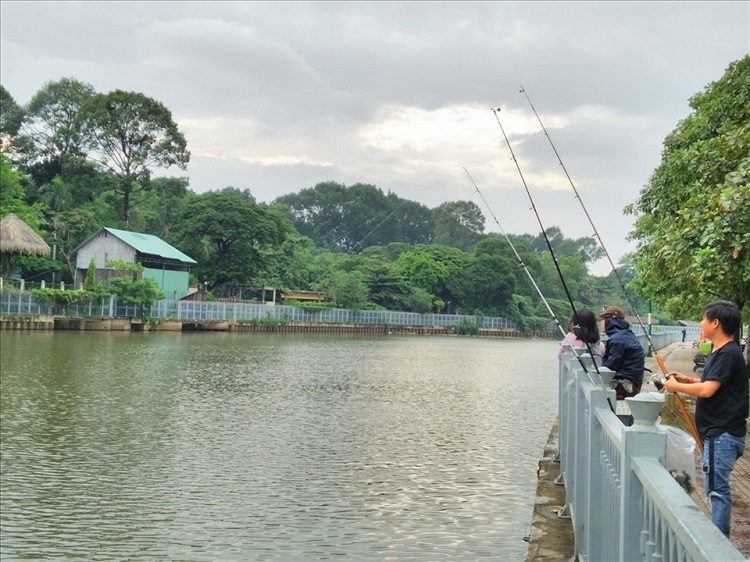
The black channels being turned into green ones is an effort of the leadership of Ho Chi Minh City.
Architect Ngo Minh Hung proposes that it is necessary to position and develop a model for a city that develops towards a river-ecological urban direction, carbon-neutral, with a system of green rivers, canals, and streams that increase the characteristic features of the locality, worthy of a city that is becoming a prominent city in the world and in the region. In addition, there is a determination of city leaders and urban managers to realize the strategic objectives and vision to green the spaces of the internal and external canal system.
To realize this vision, the establishment of a fund and the socialization of resources are necessary to support green space programs associated with urban areas, especially projects that ensure diverse and rich landscapes, clean environments, and high-quality water management. Encouragement of new technical solutions, innovative technologies, and creativity to control pollutants that cause canal pollution is also recommended.
The role and participation of the community in supporting the state's policy, program, and plan to make the Saigon River and canal system green, clean, and beautiful is extremely important. This activity requires the guidance of management agencies and comprehensive planning through appropriate programs and actions for each urban area.
"The implementation of funds and socialization requires the leading role of the State. Initially, the State should allocate a budget to establish the fund. Then, call on people to continue to contribute money to develop the fund. Businesses can participate, but they must balance between profit goals and community-oriented goals. There have been cases where businesses participated in projects, but after implementation, they turned the area into their own, only serving profit purposes. That is not towards the community," Mr. Hung commented.
Developing pedestrian routes to create a unique identity for the lives of people living along the canal. With 30 years of international experience in consulting design and architectural planning in Asia and North America, having advised on the planning and design of East and West Shanghai streets in China, Dr. Nguyen Viet Nam Son is deeply passionate about the development and improvement of the canal system in Ho Chi Minh City. According to him, Ho Chi Minh City has always been a riverine urban area, but it is still "sleeping". Therefore, it is time to awaken the riverine urban identity of Ho Chi Minh City to develop it to its full potential.
Speaking about the planning of canals in Ho Chi Minh City, Architect Ngo Viet Nam Son suggests that special attention should be paid to the streets on both sides of the canals because they have been developing spontaneously for a long time. "We need to plan the streets on both sides of the canal, developing them towards tourism. We must consider parking lots, rearrange sidewalks, provide walking areas for residents, and the remaining space for vendors, with seating areas and shelters. It is possible to plan multi-functional streets, with commercial activities on the ground floor and dining, entertainment on the upper floor. At night, there should be lights and traditional signage. At the same time, we can develop transportation routes on the canal using boats to take tourists to admire the beauty on both sides. Ho Chi Minh City is currently overloaded with high-rise buildings, lacking green space, and improving the canal banks will help increase the city's green space. With a proper plan, investors will see the benefits and be willing to invest. We can then call for public-private partnerships to finance the project," Mr. Son shared.
According to Mr. Ngo Viet Nam Son, developing Ho Chi Minh City towards a river and water urban area requires attention to the historical and cultural traditions of the region in order to plan appropriately. "When we planned and renovated Shanghai and the canal areas, it was very attractive to tourists. These canals have a rich history, beautiful floating bridges, and long-standing residents who create the unique character of the locality. Therefore, we decided to preserve and plan carefully, renovate and turn them into clean canals that attract tourists. Ho Chi Minh City can refer to this," Mr. Son said.
Regarding the lives of people living around the canals in Ho Chi Minh City, Mr. Son believes that for those who live illegally, they must be relocated to restore a green and clean environment for the canals. For these people, there must be appropriate resettlement policies to ensure stable lives for them. As for those who have lived there legally for a long time, job opportunities should be arranged for them based on the resources along the canals. "When we plan and develop the streets on both sides of the canals to become attractive and unique compared to other streets, attracting tourists and bringing profits to people living around, they will have the awareness to preserve and protect their livelihood," Mr. Son emphasized.
Ms. Dang Thuc Trang also shared: "We have planned for the fishermen in Nhon Ly fishing village (Binh Dinh), everything has to be done step by step, cannot be cleaned up immediately. For those who trade baskets and selling goods, if they do well, they can create an interesting cultural feature that attracts tourists. In addition, when planning the canals for tourism purposes, building embankments, parks, the lives of the people around the canal will become valuable. Previously, people filled the canals to build houses facing the street, but now people are building houses facing the river, stream, canal, and ditch to have beautiful views. Everyone wants to stroll every day, enjoying the cool breeze from the green, clean, and beautiful canals, the important thing is to have vision and capital to implement those plans," Ms. Trang shared.